


Most schools do not think hard about their clothing policy. They inherit it, or imitate a school they admire, or default to tradition. At Vasant Valley School, Gurgaon Campus we chose to start somewhere different. Not with “what should children wear?” but with: what does clothing actually mean at different stages of a child’s development, and what should a school’s policy genuinely serve?
The answer we arrived at is that different ages demand different conditions. A policy designed for a five-year-old is not right for a fifteen-year-old. And a school that applies a single rule across all ages is responding to administrative convenience, not to the children in front of it.
What the research actually shows
The evidence on school uniforms is more nuanced than the debate usually suggests.
The most rigorous studies, including a longitudinal analysis of over 25,000 students by Brunsma and Rockquemore and an independent analysis by Yeung using two national datasets, found no significant relationship between uniform policies and academic performance, attendance, or behaviour. This finding has been replicated consistently enough to state plainly: uniforms do not make children better learners.
On belonging, the evidence is even more surprising. A nationally representative study published in Early Childhood Research Quarterly (Ansari, Shepard and Gottfried, 2022) found that elementary-aged students in uniform schools reported lower levels of belonging than their peers without uniforms. Belonging is built through being known, valued, and accepted as yourself. Uniforms create visual group membership, but that is not the same thing. One says you belong here because you are known here. The other says you belong here because you look like everyone else here. For a young child still forming a sense of self, these are not equal.
The physical activity findings are the ones that most changed our thinking. A 2024 University of Cambridge study drawing on data from over one million children across 135 countries found that where schools require uniforms, fewer children meet the WHO’s recommended sixty minutes of daily physical activity. The gender gap is particularly striking: girls who feel uncomfortable in restrictive clothing simply move less. A follow-up systematic review in Frontiers in Sports and Active Living (2025) confirmed that sports-style school clothing is associated with significantly higher activity levels, with the effect most pronounced for primary-aged girls.
We also want to be honest about what uniforms do well. Some research suggests they can reduce visible markers of socioeconomic difference, and there is evidence that a shared visual identity can support collective belonging for older students. The impact of uniforms is not uniform. It is developmental, contextual, and depends enormously on what kind of clothing system is being considered.
Why age changes everything
The most significant gap in most uniform debates is developmental thinking. Erik Erikson’s framework gives us a precise lens.
In early childhood (ages 2–6), the central tasks are autonomy and initiative. A two-year-old who chooses what to wear is practising independence, experiencing what it feels like to have preferences and to have them respected. A school that removes this choice is working against the child’s development at precisely the stage when those capacities are being formed.
In middle childhood (ages 6–12), the physical activity evidence is unambiguous: sports-style clothing produces meaningfully higher activity levels than traditional uniforms, with the effect most pronounced in primary-aged girls. Movement is non-negotiable at this stage, and what a child wears either enables or constrains it.
In adolescence (ages 12–18), the central task is identity formation. A 2026 study in Frontiers in Psychology found that when a shared clothing system supports rather than suppresses a student’s sense of belonging, it can contribute positively to self-efficacy, resilience, and optimism. The question for older students is not whether to have a shared clothing identity, but what kind, and whether it is designed with the student’s developmental needs at its centre.
Our position
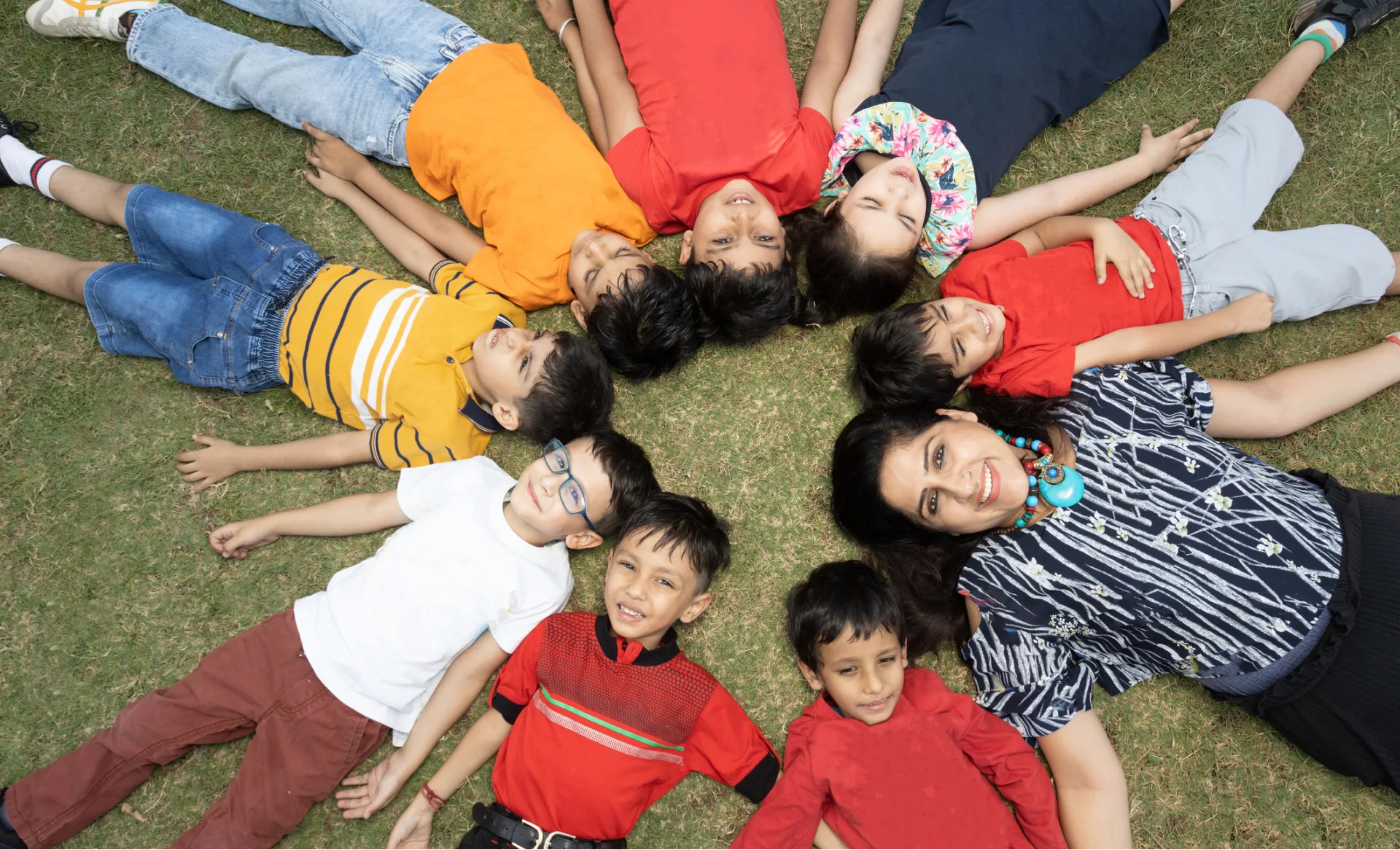
In the early years (Foundation to KG), we do not require a uniform.
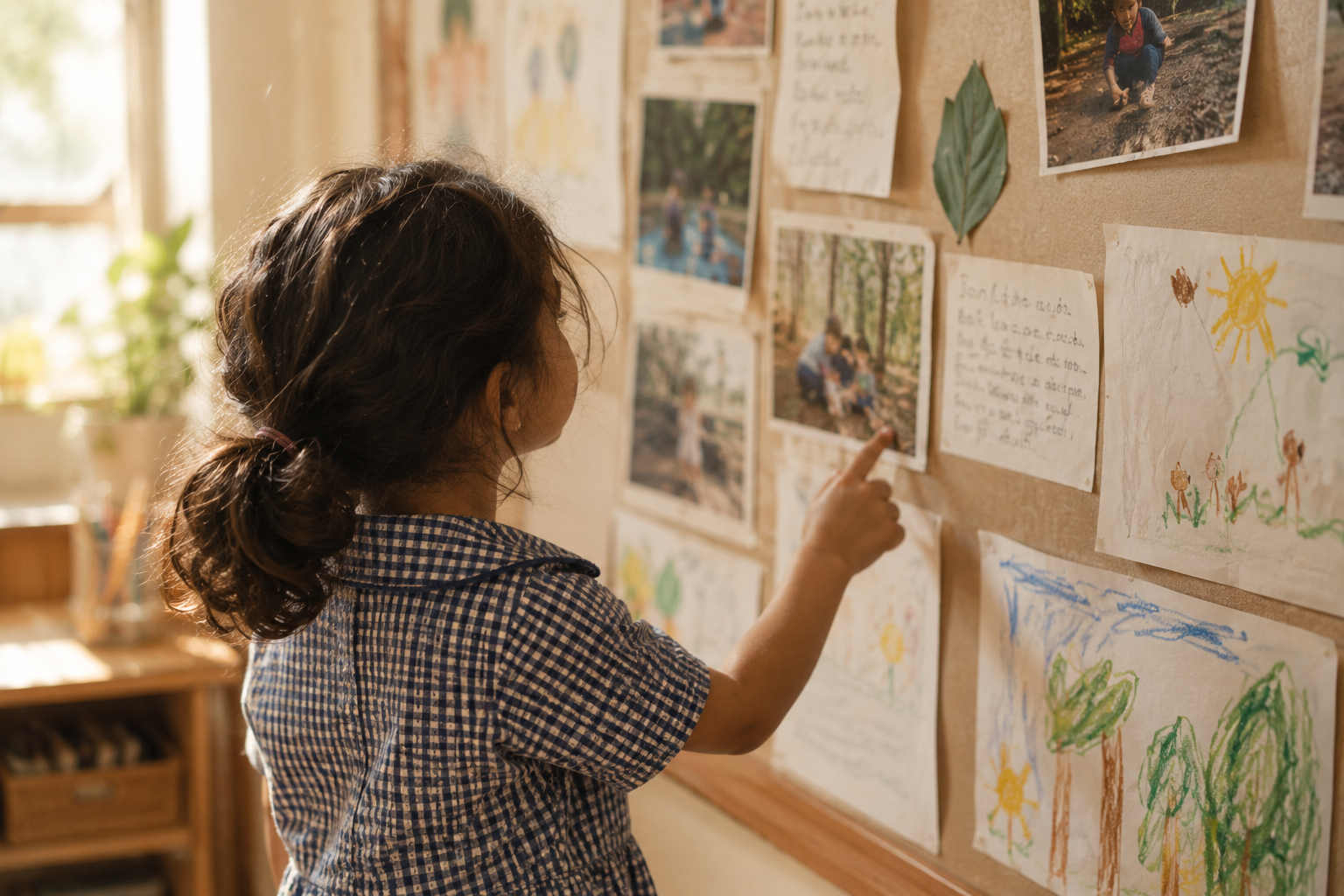
Children in these years are in the developmental stages where autonomy and physical freedom are not supplementary values. They are the curriculum. We want young children to arrive having made, or helped make, a small decision about themselves. We want them to run, climb, paint, and get muddy without a second thought about what they are wearing. These are the building blocks of agency.
This is not an absence of structure. Clear practical guidelines will ensure clothing is comfortable, appropriate for active learning, and easy for children to manage independently. The intent is to guide without controlling.
From Class 1 onwards, we will introduce a simple, activewear-based school clothing system.
As children move through middle school and adolescence, the desire to belong to something becomes more conscious and more meaningful. A shared visual identity can serve a genuine developmental purpose at this stage: not conformity for its own sake, but collective membership that supports belonging without demanding the suppression of self.
The design matters. A traditional formal uniform produces the outcomes the research describes: constrained movement and a gender gap in physical activity. What we are designing is different: a clothing system built on the principles of activewear, prioritising comfort, flexibility, and freedom of movement across a full school day, in classrooms, on courts, outdoors, and everywhere in between.
Belonging at Vasant Valley School, Gurgaon Campus will be built through the quality of relationships between teachers and students, through shared experiences that accumulate into culture, and through an environment where every child feels genuinely known. That kind of belonging does not require identical clothing. It requires the daily work of making each child feel that they matter here, exactly as they are.
We are designing for the child in front of us. At every age, at every stage, with every decision we make.