


There are few aspects of schooling as familiar, and as quietly debated, as homework. Traditionally it has been seen as a measure of academic seriousness and discipline. But research is now inviting harder questions. Does more homework lead to better learning? When does practice become pressure? And most importantly, what kind of learning should travel home from school?
At Vasant Valley School, we do not assign homework out of habit. We assign it only when it earns its place in a child’s evening.
What the research actually shows
One of the most widely cited guidelines in homework research comes from educational psychologist Harris Cooper, who proposed what has become known as the 10-minute rule: roughly 10 minutes of homework per grade level, per evening. The benefits of homework vary significantly with age and intended purpose.
John Hattie’s synthesis of over 800 meta-analyses in Visible Learning confirms that homework has minimal academic impact in the primary years and becomes meaningfully effective only in adolescence. Its effect, even then, is modest compared to more powerful influences such as feedback, teacher clarity, and formative assessment.
The question shifts from is homework important? to for whom, for what purpose, and under what conditions?
The brain is not a storage device
The simple assumption has always been that more hours spent on homework equals more learning. Cognitive science tells a different story.
Learning depends on encoding new ideas, revisiting them over time, and applying them in new contexts. Studies consistently show that students retain concepts more durably when learning is distributed across shorter sessions, an effect researchers call the spacing effect, rather than compressed into long sittings. Retrieval practice, explaining a concept, applying knowledge, or solving a problem, is significantly more powerful than rereading notes or completing mechanical exercises.
More homework does not automatically equal more learning. In fact, excessive homework can have the opposite effect: fatigue, stress, and diminished motivation actively undermine the very learning homework is meant to strengthen.
What good homework quietly builds
One of the least discussed dimensions of homework is what it can develop when it is designed well: the internal capacities that make a child a self-directed, resilient learner.
Research on volitional learning strategies, developed by Corno (1994) and elaborated by McCann and Turner (2004), describes the specific internal skills learners use to sustain effort, protect their intentions from distraction, and complete meaningful work even when motivation fluctuates. These strategies broadly come down to encouraging yourself, reminding yourself why the work matters, and calming yourself down. Students who consciously use these strategies outperform those who rely on motivation alone. As Corno puts it: motivation gets you started; volition keeps you going.
Closely related are executive functions, the mental skills that help a child plan, begin, and sustain a task: holding information in mind, switching between ideas, and resisting distraction. Research consistently shows these are among the strongest predictors of academic success and long-term wellbeing (Diamond, 2013). They develop most rapidly between ages 3 and 7, with a second growth period in adolescence.
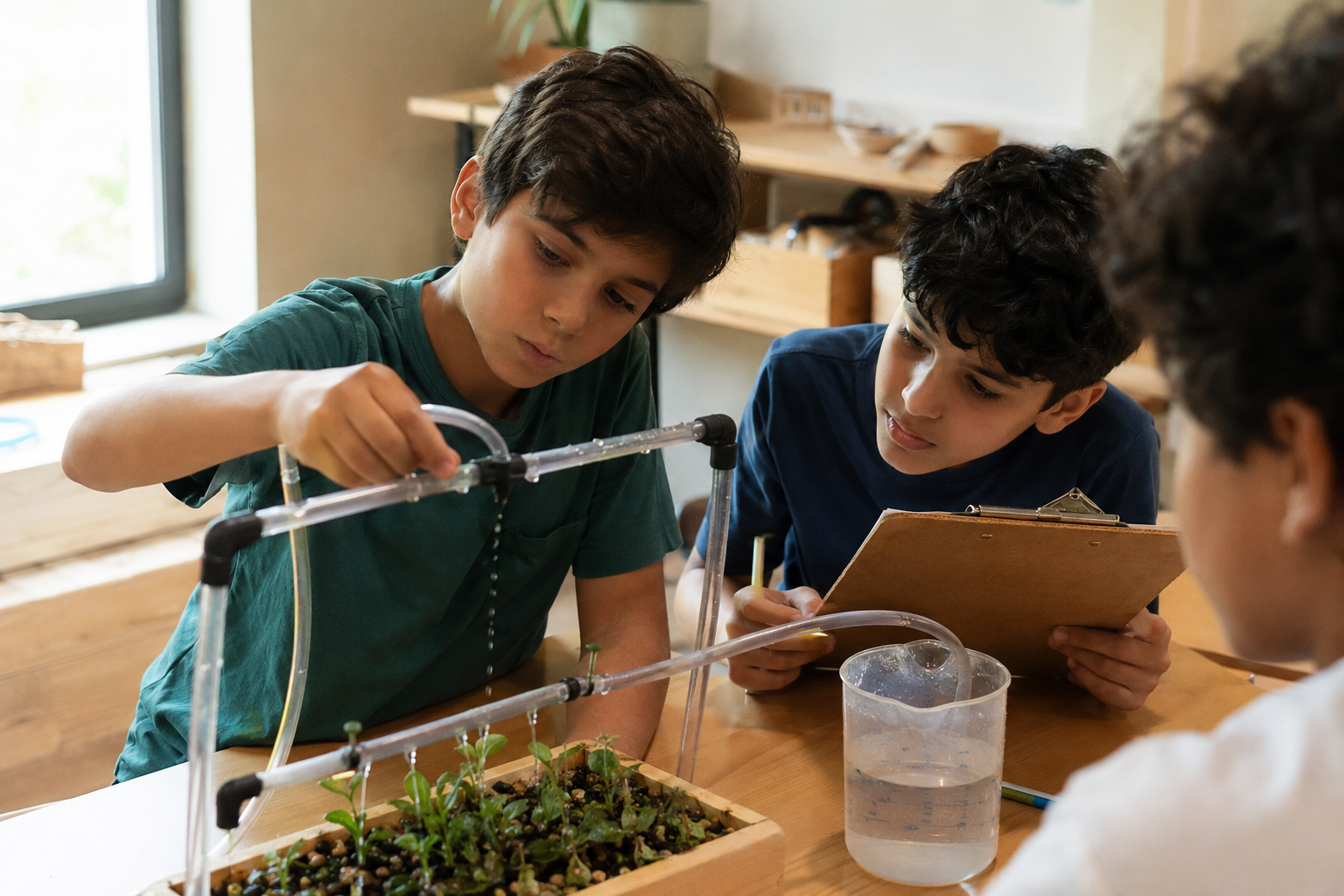
The value of a well-designed homework task is not only in the content it covers. It is in the experience of sitting with difficulty, managing the urge to give up, choosing a strategy, and arriving at completion. This is where the inner architecture of an independent learner is built, not through volume, but through the deliberate practice of self-regulation.
Why younger children need something different
The research is clear: younger children benefit far less from formal homework than older students. Young children are still building the very capacities, attention, self-regulation, working memory, that make independent homework possible. The executive functions required to plan, begin, and sustain a task at home are still under construction.
This does not mean learning should stop at the school gate. It means we must think differently about what meaningful learning beyond school looks like for a young child.
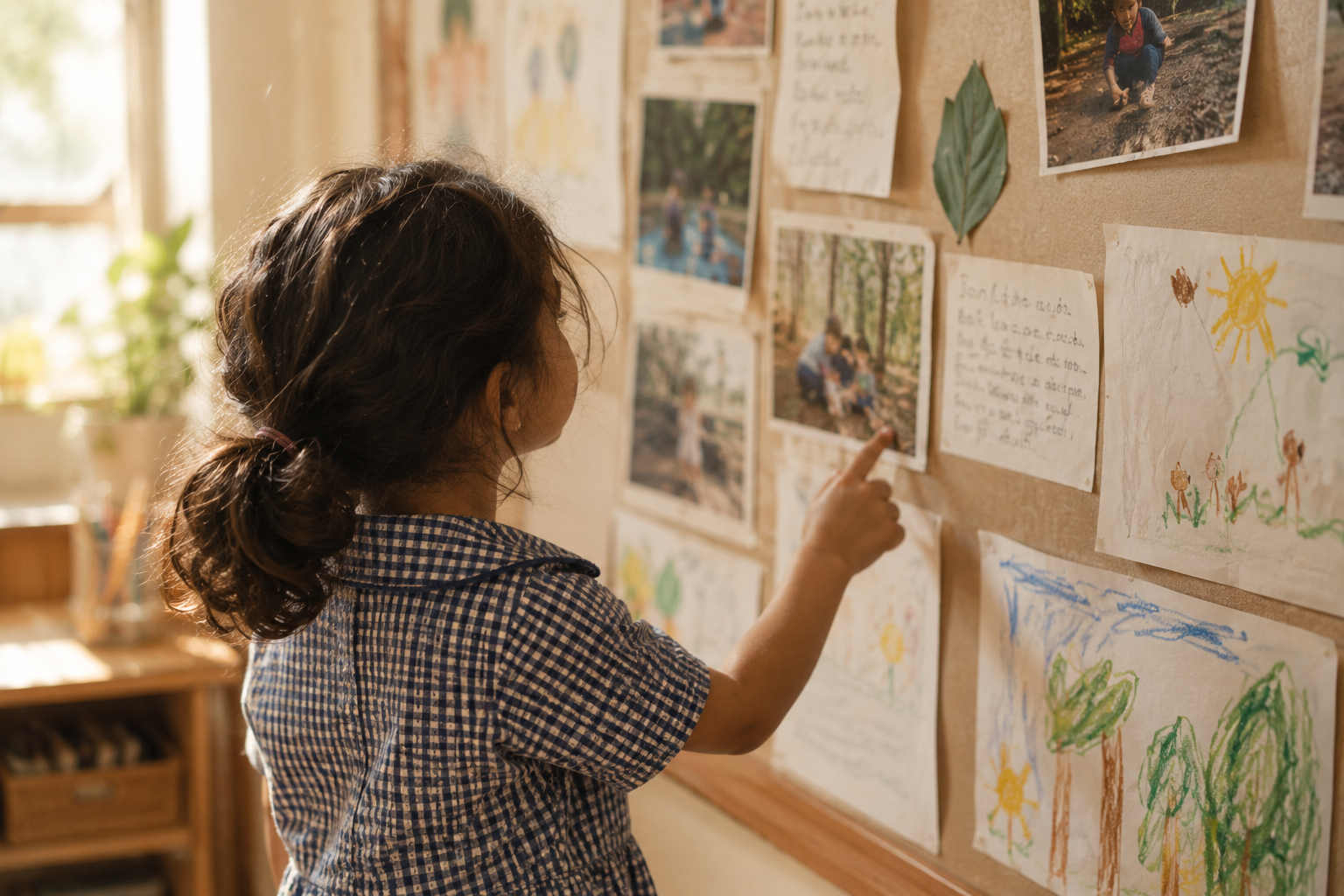
Reading together. Cooking and measuring. Observing shadows. Asking questions at the dinner table. Noticing patterns in the natural world. These are not lesser alternatives to homework. They are developmentally richer and more genuinely formative. They develop precisely the volitional and executive capacities that will later make formal independent study possible.
Our approach
A school committed to whole-child education does not assign homework by habit. Every task that travels home must justify its place in a child’s evening.
For our youngest children, that means rich learning at home through reading, play, conversation, and everyday discovery rather than formal worksheets. As children grow, homework becomes a purposeful space for practice, reflection, and independent thinking, always time bound and matched to the child’s stage of development.
In practice, this means fewer tasks with more depth; retrieval and reflection over mechanical completion; and volitional strategies taught explicitly as children grow, so they learn not just what to do, but how to keep going when it gets hard.
It also means holding firmly to something the research makes plain: sleep, play, family time, and unstructured experience are not distractions from education. They are part of what makes learning and development possible.
The real question for any school is not how much homework children should do, but what kind of learning deserves a place in a child’s evening, and what it is quietly building inside them.
When homework is thoughtfully designed, bounded in time, and matched to developmental stages, it can extend curiosity, deepen understanding, and develop the very capacities that sustain a person through a lifetime of learning. When it is excessive, mechanical, or habitual, it risks eroding the intrinsic motivation and love of ideas that make genuine learning possible at all.
That is a distinction worth taking seriously.