

Over the last few years, schools have leaned heavily on laptops, tablets, digital textbooks, online homework, and now AI tools. Some of this has genuinely helped. But when screen use creeps in everywhere, it can quietly crowd out the things children need most: attention, movement, handwriting, discussion, deep reading, and real human connection.
The question we ask at Vasant Valley is not whether technology amplifies learning. It does. The harder, more useful question is when do screens genuinely help children learn, when do they get in the way, and how do we protect children’s attention and development while still preparing them for a digital world.
Quality matters more than minutes
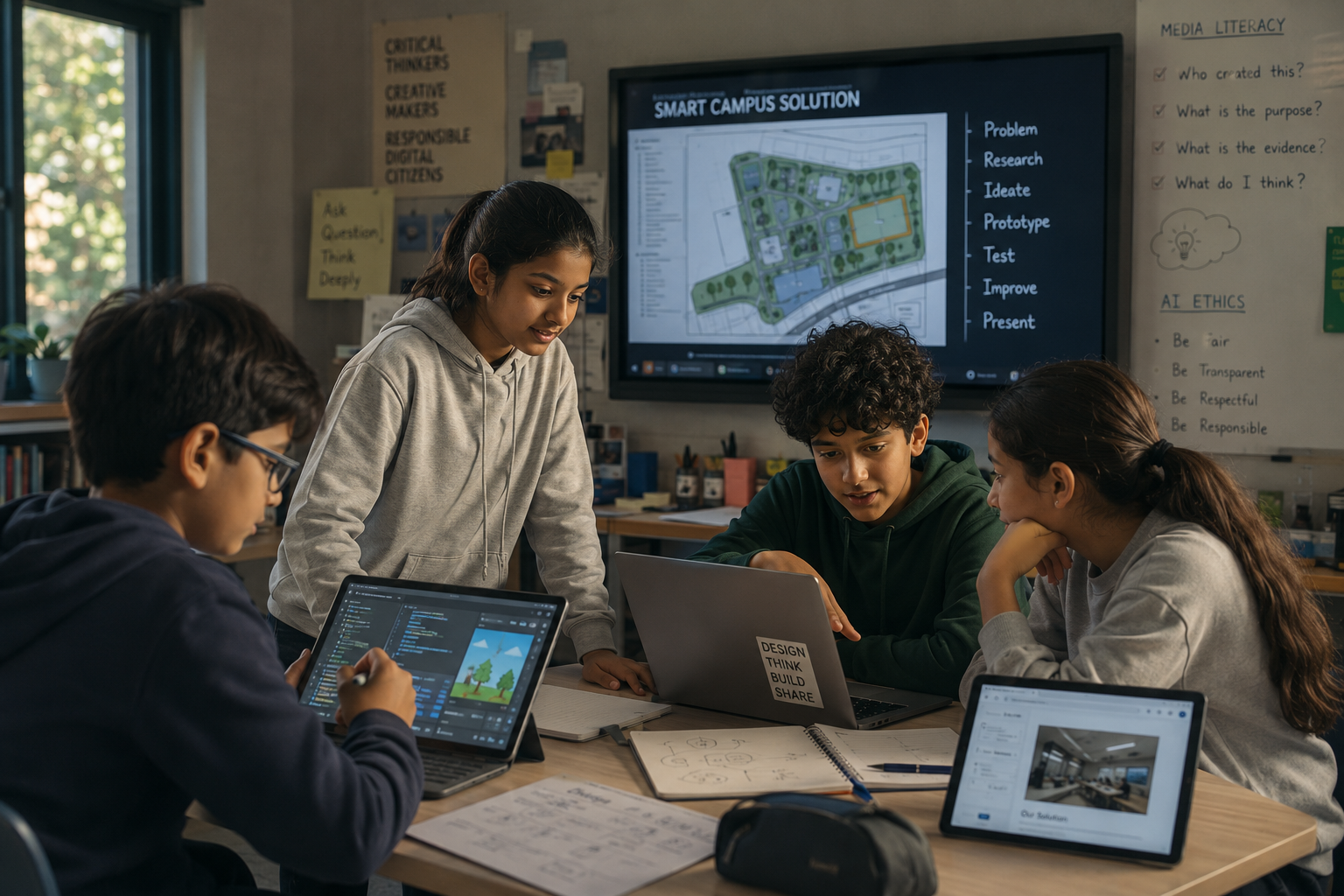
Counting screen-time minutes is a start, but it misses the point. A child using a tablet to code, make a short film, analyse data, or collaborate on a design project is having a completely different experience from a child passively watching videos, working through repetitive digital worksheets, or drifting between tabs.
The American Academy of Paediatrics encourages us to look beyond the clock: at the child, the content, how screens affect emotions, and what screen time is quietly replacing. That last part matters most. Healthy screen use should never come at the cost of sleep, physical activity, or face-to-face connection.
So we distinguish between two kinds of screen use. Healthy use is active, purposeful, and creative. It supports clear learning goals, enables something genuinely hard to do offline, and is balanced with talk, writing, movement, and hands-on work. Poor use is passive, repetitive, or used as filler: the digital worksheet that simply copies a paper one, the video that replaces a teacher, the screen handed to a class to keep it quiet.
Age matters
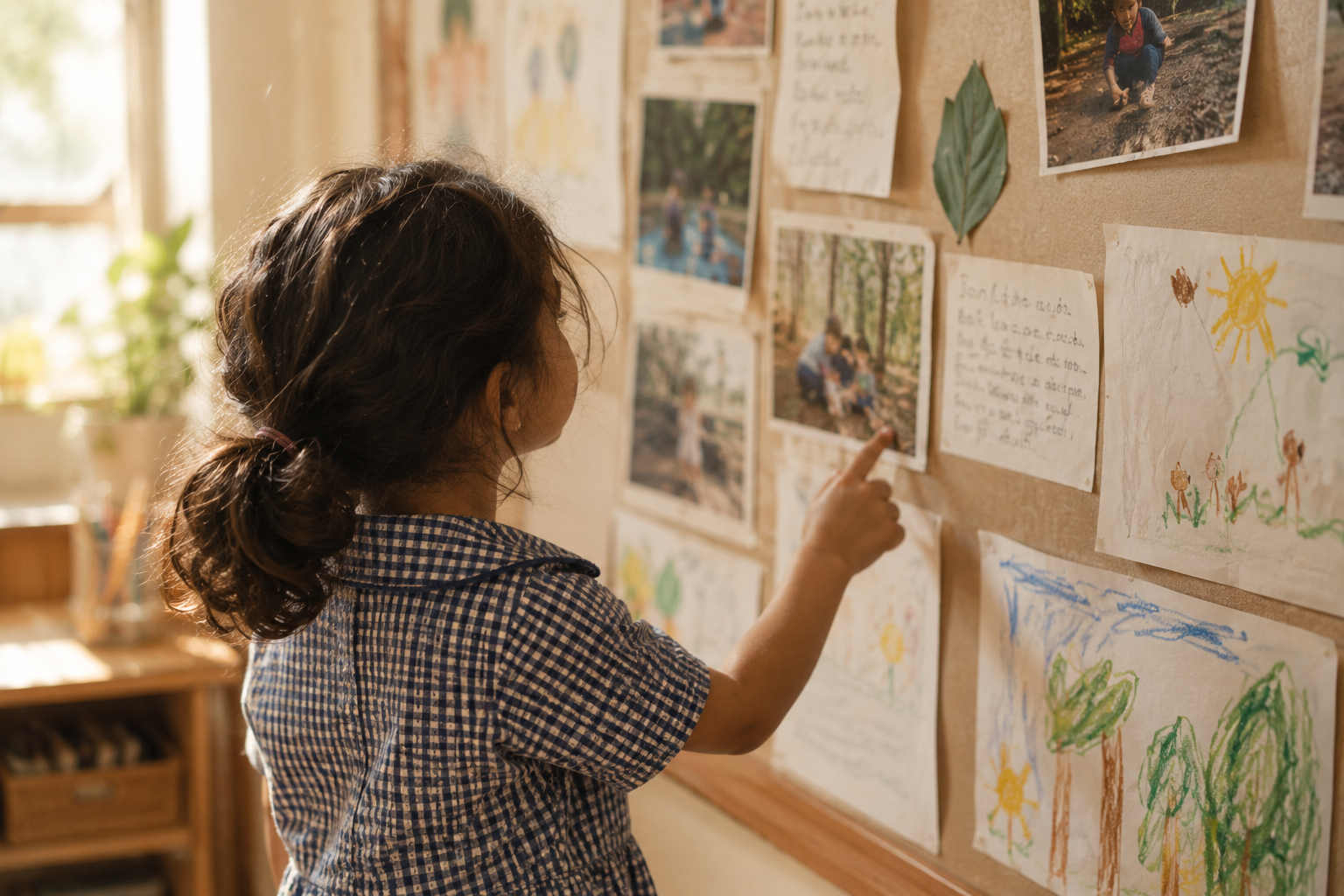
Younger children need more of the real, sensory, language-rich, movement-filled world. Our early years and primary classrooms lean into conversation, storytelling, play, drawing, building, outdoor exploration, music, handwriting, and time together.
For our youngest learners, screen use is minimal, short, adult-guided, and clearly purposeful. As children grow, our approach evolves with them: short, purposeful creation and research tasks in Grades 3 to 5; structured inquiry, coding, and media literacy in middle school; and more independent research, source evaluation, and digital creation in senior school, always alongside clear norms for focus, self-regulation, and AI ethics.
The principle across all stages is the same: technology enters the classroom because it makes learning better, not because it is convenient.
What we protect
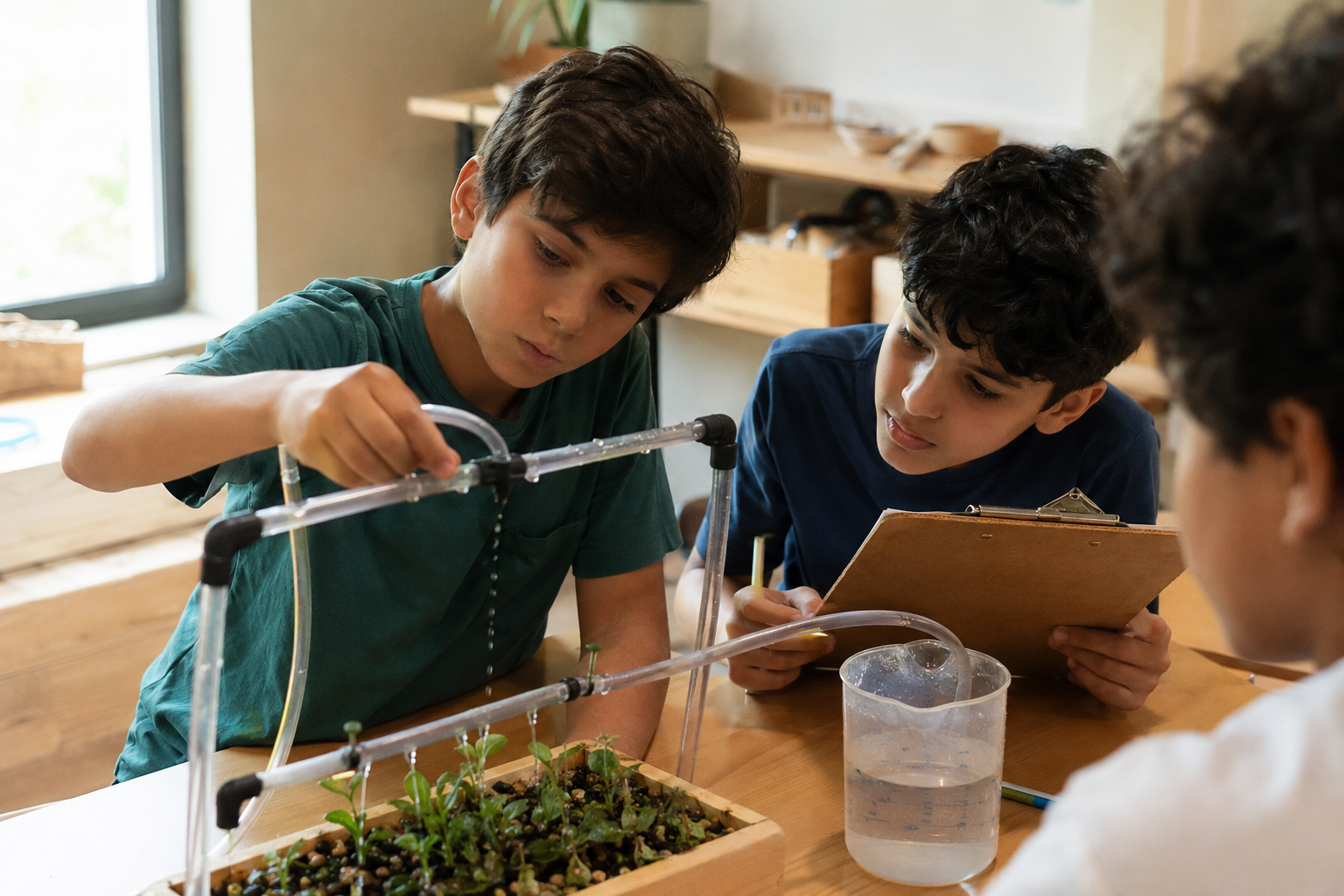
Every school day includes real, deliberately protected screen-free learning. Children need regular time for handwriting and sketching, reading printed texts, working through maths on paper, laboratory and maker work, discussion and debate, outdoor observation, the arts, and face-to-face collaboration.
We do not leave this to chance. We protect it through paper-based work, whiteboards, experiments, and performances. In early years, most of the day is screen-free. In junior school, the majority of classroom learning happens away from screens. In middle and senior school, screen-free days and intentional offline activities are built into the structure, not treated as exceptions.
Many children may already spend significant time on screens at home. If all homework lives on a device, we can unintentionally extend screen time deep into the evening. Our youngest children’s homework stays entirely offline. From Grade 3 onwards, we introduce short, adaptive online practice for what it does best, personalisation, done under a parent’s eye and for short task durations.
Digital safety as a skill, not a set of rules
Whenever children are online at school, they are on a protected network with age-appropriate filtering, and their work is visible to teachers. We choose tools that respect children’s privacy and protect their data.
But safety online is something we build with children, not just around them. Research draws a clear line between restriction, which narrows risk but also narrows what a child can explore and learn, and guided engagement, which protects children while preserving the real opportunities being online offers them. Children learn to protect their privacy, recognise when something feels wrong, think before they share, and come to a trusted adult when they need help. As they grow, this becomes the judgment they will need beyond school: spotting misinformation, understanding their digital footprint, and treating others well online.
What families can do at home
Our efforts work best when echoed gently at home. Families do not need to police every minute. Research is consistent: children whose parents stay actively involved in their digital lives, talking about what they have seen, asking questions, sometimes simply being present, navigate online risk better than children managed through rules and restriction alone.
A few things make a real difference. Lead by example: children copy what we do far more than what we say. When they see us put a phone away at dinner, they learn that the people in front of us come first. Talk, rather than just monitor: ask your child what they used a device for, and whether it helped. These everyday conversations build the judgment that no rule can. Protect sleep, meals, and movement by keeping bedrooms and mealtimes screen-free where you can. And when you do watch something together, even ten minutes of shared watching, asking why a character did something or what your child thinks, turns passive viewing into conversation that builds vocabulary and empathy.
The future-ready school is not the one with the most screens. It is the school where children know when to use technology, when to put it away, and how to think deeply in both digital and non-digital worlds.
That is what we are building.